
Camping Safaris in East Africa and 4×4 Rooftop Tent Rentals
There is a big difference between staying near a national park and sleeping inside one. On a Camping Safari in East Africa, when a hyena walks through your campsite at 2am or a hippo grazes twenty meters from your tent at dawn, you are not watching Africa through a window, you are in it.
East Africa is where camping safaris make the most sense. The parks here are big enough that where you sleep actually matters. A camp inside the Serengeti means your morning game drive starts before breakfast, not after a two-hour transfer. A tent on the rim of Ngorongoro Crater means you watch the mist clear off the caldera with your coffee. A night at Bwindi means you can hear the forest before you go in for your gorilla trek.
Explore East Africa with a 4×4 rooftop tent, your camping gear packed and the freedom to choose where the road takes you.
Travel through Kenya, Tanzania, Uganda or Rwanda on a self-drive camping safari, or hire a driver-guide and let someone else handle the road while you enjoy the journey.
Our 4×4 Camping Safaris in East Africa
14-Day Rwanda–Uganda Camping Safari
- Day 1: Fly into Kigali. Airport pickup, hotel check-in, rest and a city briefing with your guide.
- Day 2: Drive east to Akagera National Park (about 3 hrs). Afternoon boat cruise on Lake Ihema, see hippos, crocodiles, and waterbirds from the water. Camp at Shakani Campsite on the lake shore.
- Day 3: Full day game drive inside Akagera. Lions, elephants, buffaloes, zebras. Camp again at Shakani or Muyumbu Campsite.
- Day 4: Morning game drive, then drive northwest to Volcanoes National Park (about 4 hrs). Check into camp near Kinigi, the gateway village to the gorilla park.
- Day 5: Gorilla trekking day in Volcanoes National Park. You spend one hour with a gorilla family in the forest. It’s hard to describe until you’ve done it. Back to camp at Kinigi.
- Day 6: Optional golden monkey tracking or Dian Fossey hike to Karisoke. Drive to the Uganda border, cross at Katuna, and head to Kabale. Camp near Lake Bunyonyi.
- Day 7: Morning on Lake Bunyonyi (boat ride, island walk). Drive through Ishasha sector of Queen Elizabeth National Park, scanning the fig trees for Uganda’s tree-climbing lions. Camp at Ishasha Wilderness Camp.
- Day 8: Full game drive in Queen Elizabeth National Park. Afternoon Kazinga Channel boat cruise, see hippos crowd the banks here like you’ve never seen. Camp at Mweya or Simba Camp near the channel.
- Day 9: Drive to Kibale Forest National Park. Afternoon chimp tracking in the forest, Kibale has the highest density of primates in East Africa. Camp near Kibale Forest Camp.
- Day 10: Morning chimpanzee tracking or Bigodi Wetland walk (great for birds and red colobus monkeys). Drive toward Bwindi Impenetrable Forest. Camp near Bwindi Lodge tented area or Buhoma Community Camp.
- Day 11: Gorilla trekking in Bwindi. The trek can take anywhere from 30 minutes to 5 hours depending on where the family is, rangers track them every morning. Back to camp for a long lunch and rest.
- Day 12: Rest morning at Bwindi. Drive north through Fort Portal toward Kampala. Camp or budget lodge overnight near Fort Portal or Mbarara.
- Day 13: Drive to Kampala or Entebbe. Afternoon free to explore Kampala or visit the source of the Nile at Jinja en route.
- Day 14: Morning depart. Drop-off at Entebbe International Airport.
11-Day Kenya–Tanzania Camping Safari
- Day 1: Arrive Nairobi. Airport pickup and transfer to your guesthouse. Rest, briefing with your guide, and an early night
- Day 2: Drive south to Amboseli National Park (about 4 hrs). On a clear day Kilimanjaro fills the horizon from inside the park, it’s one of those views that stops you mid-sentence. Afternoon game drive. Camp at Kimana Campsite or Amboseli Public Campsite.
- Day 3: Full day in Amboseli. Morning and afternoon drives. The elephant herds here are some of the most studied in Africa, large family groups with mountain Kilimanjaro as their backdrop. Camp again at Amboseli.
- Day 4: Morning drive, then drive northwest to Lake Nakuru National Park via Nairobi (about 5–6 hrs total). Lake Nakuru is where Kenya reintroduced rhinos, both black and white rhino roam here, which is rare anywhere on the continent. Afternoon game drive on arrival. Camp at Lake Nakuru Campsite inside the park.
- Day 5: Full day at Lake Nakuru. Morning drive for rhinos, leopards and the flamingos on the lake shore. Afternoon drive through the southern woodland. Camp again at Lake Nakuru.
- Day 6: Drive west to the Masai Mara (about 3 hrs). Check into camp and head straight out for an afternoon game drive, the Mara ecosystem doesn’t wait. Camp at Sekenani Campsite or a bush campsite near Talek gate.
- Day 7: Full day in the Masai Mara. Two drives, early morning and late afternoon when the light is best. If you’re here between July and October, this is when the Great Migration river crossings happen at the Mara River. Wildebeest by the thousands going in, crocodiles waiting. Camp again in the Mara.
- Day 8: Morning drive in the Mara, then drive south and cross into Tanzania at the Isebania border. Head to the Serengeti through Bolgonja gate. Afternoon game drive on arrival. Camp at Seronera Public Campsite in the heart of the park.
- Day 9: Full day in the Serengeti. The Seronera valley is one of the most reliable spots in Africa for big cats year-round, lions especially. Two drives. Camp again at Seronera.
- Day 10: Morning drive in the Serengeti, then drive east to Ngorongoro Conservation Area. Stop at Olduvai Gorge on the way, archaeologists found some of the oldest human remains on earth here, worth 20 minutes of your time. Set up camp at Simba Campsite on the crater rim. Dinner with the crater dropping away below you.
- Day 11 (departure day): Down into Ngorongoro Crater at 7am. Full day inside the caldera — black rhinos, lions, elephants, flamingos on the soda lake, all within a 20km bowl. Back up by late afternoon and drive to Arusha (about 2 hrs). Drop-off for your onward flight.
5-Day Rwanda Camping Safari
- Day 1: Arrive Kigali. City tour including the Kigali Genocide Memorial if you want the full picture of modern Rwanda. Overnight in Kigali.
- Day 2: Drive east to Akagera National Park (about 3 hrs). Afternoon boat cruise on Lake Ihema. Camp at Shakani Campsite. The view across the lake at sunset is something to sit with.
- Day 3: Full day game drive in Akagera. Lions, elephants, giraffes, zebras and over 200 bird species. Camp again at Shakani or Muyumbu Campsite in the south of the park.
- Day 4: Drive northwest to Volcanoes National Park (about 4 hrs). Stop in Ruhengeri (Musanze) for lunch. Camp near the park entrance at Kinigi Guesthouse Campsite.
- Day 5: Gorilla trekking in Volcanoes National Park. Afternoon golden monkey tracking or just a slow afternoon in the camp. Drive back to Kigali by evening for your onward flight.
6-Day Tanzania Camping Safari
- Day 1: Arrive Arusha. Meet your guide and get a briefing. Overnight in Arusha.
- Day 2: Drive to Tarangire National Park (about 2.5 hrs). This park has some of the largest elephant herds in Tanzania, and the baobab trees make every photo look dramatic. Full day game drive. Camp at Tarangire Public Campsite inside the park.
- Day 3: Morning drive in Tarangire, then head northwest to the Serengeti (about 5 hrs). Afternoon game drive in the Seronera area on arrival. Camp at Seronera Public Campsite.
- Day 4: Full day in the Serengeti. Two drives, morning and late afternoon. The central Seronera valley is reliable year-round for lions, leopards, and cheetahs. Camp again at Seronera.
- Day 5: Morning drive, then drive east to Ngorongoro Conservation Area. Stop at Olduvai Gorge on the way. Set up camp at Simba Campsite on the rim, the crater drops away below you.
- Day 6: Down into Ngorongoro Crater at 7am. Full day inside the caldera. Lions, elephants, black rhinos, flamingos on the soda lake, it’s all in there. Drive back to Arusha by evening for your flight.
10-Day Uganda Camping Safari
- Day 1: Arrive Entebbe or Kampala. Transfer to your first overnight near Kampala.
- Day 2: Drive north to Murchison Falls National Park via Masindi (about 5–6 hrs). Stop at Ziwa Rhino Sanctuary for rhino tracking on foot. Camp at Red Chilli Rest Camp or Sambiya River Lodge tented area.
- Day 3: Morning game drive on Murchison’s northern bank, see giraffes, elephants, lions, and Jackson’s hartebeest. Afternoon boat cruise up to the base of Murchison Falls where the Nile forces through a 7-meter gap in the rock. Camp inside the park at Paraa.
- Day 4: Second game drive in Murchison. Drive south through Hoima. Overnight camp near Fort Portal or Kibito.
- Day 5: Drive to Kibale Forest National Park. Afternoon chimpanzee tracking, the chimpanzees here are fully habituated, which means they go about their day without paying too much attention to you. Camp at Kibale Forest Camp or Turaco Treetops tented camp.
- Day 6: Morning Bigodi Wetland Sanctuary walk (red colobus monkeys, otters, 200+ bird species). Drive to Queen Elizabeth National Park. Camp at Mweya or Simba Camp on the Kazinga Channel.
- Day 7: Morning game drive in Queen Elizabeth, the Kasenyi plains are good for lions and Uganda kob. Afternoon Kazinga Channel boat cruise. Hippos line the banks. Camp again at Mweya.
- Day 8: Drive south through the Ishasha sector, scanning the fig trees for the famous tree-climbing lions unique to this area. Cross into Bwindi Impenetrable Forest. Camp at Buhoma Community Camp or Gorilla Forest Camp tented area.
- Day 9: Gorilla trekking in Bwindi. One permit = one hour with one gorilla family. Most people say it’s the best hour of the entire trip. Rest of the day at camp.
- Day 10: Morning forest walk near Bwindi. Drive back toward Kampala. Drop-off at Entebbe Airport.
7-Day Kenya Camping Safari Itinerary
- Day 1: Arrive Nairobi. Airport pickup. Overnight at a Nairobi guesthouse near Wilson Airport.
- Day 2: Drive south to Amboseli National Park (about 4 hrs). Kilimanjaro rises just across the Tanzania border and on a clear afternoon you’ll see it perfectly. Afternoon game drive. Camp at Kimana campsite or Amboseli Sopa tented site.
- Day 3: Full day in Amboseli. The elephant herds here are some of the largest and best-studied in Africa. Morning and afternoon drives. Camp again at Amboseli.
- Day 4: Drive northwest to Lake Nakuru National Park (about 5 hrs through Nairobi). Afternoon game drive. Lake Nakuru is where rhinos were reintroduced in Kenya, you have a good chance of seeing both black and white rhino here. Camp at Lake Nakuru Lodge tented site.
- Day 5: Morning game drive at Lake Nakuru, then drive west to the Masai Mara (about 3 hrs). Afternoon arrival and first game drive inside the reserve. Camp at Sekenani, Mara Simba, or a bush campsite near the Talek gate.
- Day 6: Full day in the Masai Mara. If you’re here between July and October, this is where you watch the Great Migration crossings at the Mara River, thousands of wildebeest going in, crocodiles waiting. Otherwise: lions, cheetahs, elephants, giraffes. Camp again in the Mara.
- Day 7: Morning game drive, then drive back to Nairobi (about 5 hrs). Drop-off at Jomo Kenyatta International Airport.
30-Day Rwanda, Uganda, Kenya & Tanzania Overland Camping Safari
- Day 1: Arrive Kigali. Airport pickup, city tour, Kigali Genocide Memorial, Rwanda Art Museum. Overnight in Kigali.
- Day 2: Drive southwest to Nyungwe Forest National Park (about 6 hrs). Afternoon canopy walk, a 50-metre swing bridge suspended above the rainforest canopy. Camp at Gisakura Campsite on the edge of the forest.
- Day 3: Chimpanzee tracking in Nyungwe Forest, its about 3–5 hours in the forest depending on where the chimps are. Afternoon Isumo Waterfall trail. Camp again at Gisakura.
- Day 4: Morning colobus monkey tracking, then drive north to Volcanoes National Park (about 6 hrs). Camp near Kinigi at the park entrance.
- Day 5: Gorilla trekking in Volcanoes National Park. One hour with a habituated mountain gorilla family. Afternoon visit to Iby’iwacu Cultural Village, a traditional dance, community walk. Camp at Kinigi.
- Day 6: Second gorilla trek or Dian Fossey hike to Karisoke on Mount Karisimbi. The Fossey hike takes 6–7 hours through steep forest. Camp at Kinigi.
- Day 7: Morning hike up Mount Bisoke, a full day hike to the crater lake at the summit. Descend and cross into Uganda at Cyanika border. Overnight near Kisoro, camp at Lake Mulehe or Travellers’ Rest.
- Day 8: Golden monkey tracking in Mgahinga National Park (Uganda side of the Virungas). Drive to Bwindi Impenetrable Forest. Camp at Buhoma Community Camp.
- Day 9: Gorilla trekking in Bwindi Impenetrable Forest. The trek here can take anywhere from 30 minutes to 8 hours, rangers find the family every morning before you set off. One hour with the gorillas. Camp at Buhoma.
- Day 10: Forest trail day in Bwindi, choose the Bamboo Trail (7 hrs to Rwamunyonyi Hill with views of Lake Bunyonyi and the Virungas) or the Ivy River Trail through old jungle paths. Camp at Buhoma.
- Day 11: Drive through Ishasha sector of Queen Elizabeth National Park. Morning game drive scanning the giant fig trees for tree-climbing lions, one of only two places in the world where lions do this. Afternoon boat cruise on the Kazinga Channel. Camp at Mweya or Simba Camp.
- Day 12: Morning game drive in the Kasenyi Plains, see lions, Uganda kob, elephants, leopards. Drive to Kibale Forest National Park (about 3 hrs). Afternoon Bigodi Wetland walk. Camp at Kibale Forest Camp.
- Day 13: Full day chimpanzee habituation experience in Kibale, a full day with a semi-habituated chimpanzee group, 4 hours in their presence, not just one. Camp again at Kibale.
- Day 14: Drive north to Murchison Falls National Park (about 7–8 hrs). Overnight at Red Chilli Rest Camp or Paraa Campsite inside the park.
- Day 15: Morning game drive on Murchison’s northern bank — giraffes, elephants, lions, Jackson’s hartebeest. Afternoon boat cruise up the Nile to the base of Murchison Falls, where the entire Nile forces through a 7-metre gap in the rock. Hike to the top of the falls. Camp at Paraa.
- Day 16: Drive south, stopping at Ziwa Rhino Sanctuary for rhino tracking on foot, the only place in Uganda to see wild rhino. Continue to Entebbe. Overnight near Entebbe.
- Day 17: Fly or drive to Nairobi. Transfer to Lake Naivasha (about 4 hrs from Nairobi). Afternoon boat ride on the lake, hippos, fish eagles, 200+ bird species. Camp at Lake Naivasha Campsite.
- Day 18: Morning cycle through Hell’s Gate National Park gorge, past geysers and sheer cliffs. Drive west to Masai Mara National Reserve (about 4 hrs). Afternoon game drive on arrival. Camp at Sekenani Campsite or Mara Simba.
- Day 19: Full day in the Masai Mara. Two drives. July–October this is where the Great Migration river crossings happen, thousands of wildebeest crossing the Mara River with crocodiles waiting. Otherwise: lions, cheetahs, leopards, elephants. Camp in the Mara.
- Day 20: Second full day in the Masai Mara. Morning and evening drive. The Mara deserves two full days, you’ll see things on day two you didn’t on day one. Camp again in the Mara.
- Day 21: Drive south to Amboseli National Park via Namanga (about 6 hrs). Afternoon game drive with Kilimanjaro on the horizon. Camp at Amboseli Public Campsite or Kimana Campsite.
- Day 22: Full day in Amboseli. The elephant herds here are some of the largest and most studied in Africa, seethe big family groups moving across the plains with the mountain as a backdrop. Camp again at Amboseli.
- Day 23: Cross into Tanzania at Namanga border. Drive to Lake Manyara National Park (about 3 hrs including the border). Afternoon game drive, tree-climbing lions, flamingos on the lake shore, enormous elephant herds in the forest. Camp at Lake Manyara Public Campsite.
- Day 24: Morning game drive and nature walk in Lake Manyara. Drive to Tarangire National Park (about 1 hr). Afternoon game drive en route to camp. Camp at Tarangire Public Campsite inside the park.
- Day 25: Full day in Tarangire. The baobab trees here are enormous , some of the oldest on the continent. The elephant herds are some of the largest in Tanzania. Two drives. Camp again at Tarangire.
- Day 26: Drive north to the Serengeti (about 4 hrs). Afternoon game drive on arrival in the central Seronera area. Camp at Seronera Public Campsite.
- Day 27: Full day in the Serengeti. The Seronera valley is one of the most reliable places on earth for big cat sightings, lions especially, but also cheetah and leopard. Two drives. Camp at Seronera.
- Day 28: Second full day in the Serengeti. Morning drive, afternoon drive. The Serengeti is big enough that you cover different ground each day. Camp again at Seronera.
- Day 29: Drive east to Ngorongoro Conservation Area. Stop at Olduvai Gorge, one of the most important archaeological sites in the world, where some of the earliest human fossils were found. Camp at Simba Campsite on the crater rim. Dinner watching the mist settle into the caldera below.
- Day 30: Down into Ngorongoro Crater at 7am. Full day inside the caldera, black rhinos, lions, elephants, flamingos on the soda lake, all inside a 20km volcanic bowl. Back up to the rim by late afternoon. Drive to Arusha (about 2 hrs). Drop-off for your onward flight or optional Zanzibar extension.
Wake Up Somewhere Different Every Morning
Camping in East Africa gives you a different way to experience the safari.
Instead of travelling from one hotel to another every day, your 4×4 becomes part of the adventure. You can spend the evening around a campsite, wake up early for the day’s drive and continue towards the next destination when you’re ready.
Imagine waking up near the savannah in Kenya, spending the day following wildlife through a national park, then settling into camp as the sun goes down.
Or taking a longer road trip through Uganda, moving between forests, lakes, crater landscapes and wildlife areas while carrying your accommodation with you.
With the right vehicle and equipment, camping can give you freedom, flexibility and a closer connection to the places you visit.
A camping safari can be as simple or as adventurous as you want it to be.
You can:
- Drive yourself and set your own pace
- Sleep in a rooftop tent
- Spend nights close to wildlife areas
- Combine several East African countries
- Follow a planned itinerary or build your own route
- Hire a driver-guide if you prefer not to drive yourself
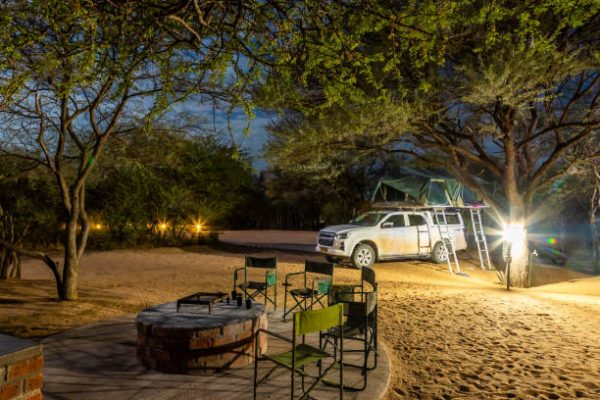
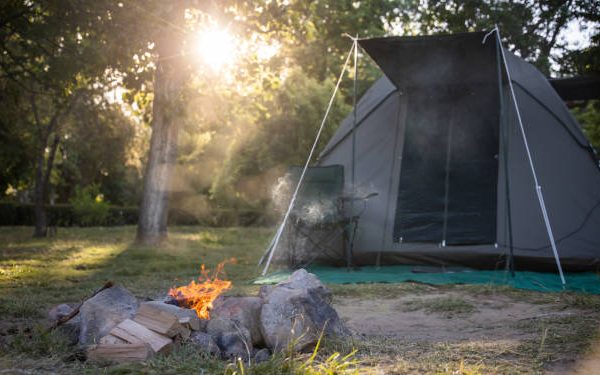
Is Camping in East Africa Right for You?
Camping in East Africa is an incredible way to experience the region’s wildlife, landscapes, and freedom on your own terms. But it’s not for everyone. Before you choose this style of travel, it’s important to understand what the experience feels like, what level of comfort you prefer, and how prepared you are for the adventure.
Is a Camping Safari Right for You?
Camping is not necessarily about roughing it.
For many travellers, it is simply a different way of exploring East Africa, one that gives you more freedom over where you stay and how you travel.
A rooftop tent provides a comfortable sleeping space while the vehicle carries the equipment you need for cooking, eating and spending time at camp.
It can work particularly well if you want to:
- Spend more time in nature
- Take a longer road trip
- Keep accommodation costs under control
- Visit several destinations on one journey
- Have more flexibility than a fixed hotel itinerary
- Experience national parks and remote areas differently
But Camping Isn’t for Everyone
If you’d rather finish a long day’s drive and walk straight into a lodge, a traditional safari package may suit you better.
And that’s perfectly fine.
The important thing is choosing the style of safari that fits you.
| If you want | Consider |
|---|---|
| Freedom and independence | Self-drive camping safari |
| Someone else to handle the driving | Driver-guided camping safari |
| A combination of camping and lodges | Mixed camping & accommodation safari |
| A longer road trip | Multi-country camping adventure |
What Does a Camping Package Include
One of the biggest concerns when planning a camping safari is figuring out what equipment you actually need. A proper camping rental should be more than a 4×4 with a tent attached to the roof.
Depending on the vehicle and package you choose, your camping setup can include the essential equipment you need for sleeping, cooking and enjoying your time at camp.
Rooftop Tent
Storage
Camp Furniture
- Camping chairs
- Folding table
- Lighting
Sleeping Equipment
- Mattress
- Bedding
- Sleeping bags
- Pillows
Cooking Equipment
|
|
Choose the Right 4×4 for Your Camping Safari
Your camping vehicle is more than just a way to get from one destination to another. It becomes part of your accommodation, your storage space and your base for exploring East Africa especially on a self-drive.
That is why choosing the right vehicle matters.
A couple travelling light may have very different needs from a family carrying camping equipment for several weeks. Likewise, a traveller planning mostly highway and park-road journeys may not need the same setup as someone planning a longer expedition through remote areas.
Popular Camping Vehicle Options
4×4 Toyota Land Cruiser
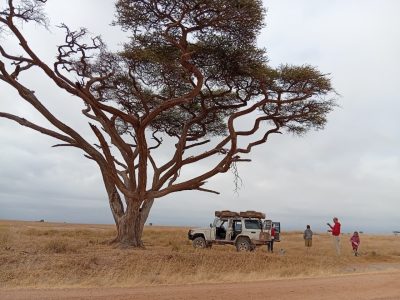
A 4×4 Land Cruiser is a strong option for travellers planning longer safari journeys, camping trips and routes where greater capability and space are important.
The Landcruiser is best suited for:
Longer camping safaris, remote routes, multi-country journeys and travellers carrying more equipment.
4×4 Mitsubishi Pajero Camper
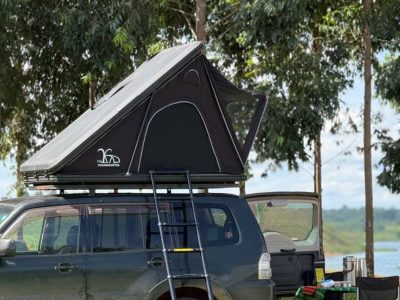
A capable 4×4 SUV with a rooftop or ground tent can be a practical option for couples or smaller groups who want the freedom of camping without choosing a larger safari vehicle.
This Mitsubishi Camp Pajero is best suited for:
Couples, shorter camping trips and travellers looking for a balance between comfort, capability and cost.
4×4 Toyota Hilux Double Cab
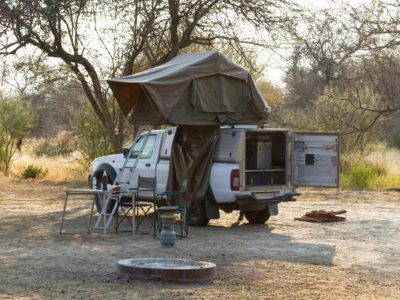
A rooftop tent setup keeps your sleeping space with the vehicle, making it easy to move from one campsite to another without packing and unpacking a traditional tent every day.
The Double Cab is best suited for:
Self-drive travellers who want flexibility and a simple mobile camping setup.
Not Sure Which Vehicle Fits Your Trip?
You don’t have to choose the biggest 4×4 simply because you’re going on safari.
Tell us where you want to go, how many people are travelling, how long you’ll be away and what kind of camping you have in mind.
We’ll help you compare the options.
Where Can You Go Camping in East Africa?
East Africa gives you very different camping experiences depending on where you travel.
You can combine wildlife, landscapes, forests, lakes and long-distance road trips, and in some cases, even cross several countries on one journey.
KENYA
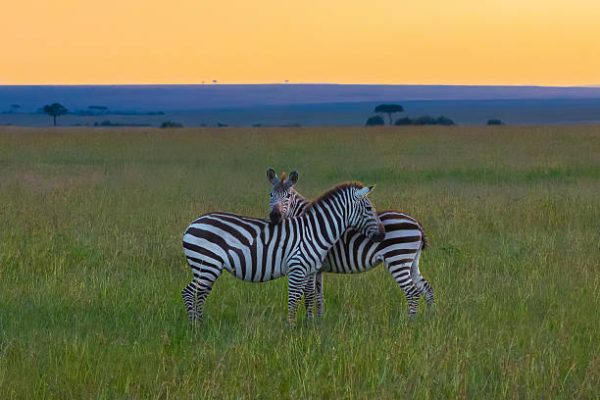
Classic Wildlife and Open‑Country Road Trips
Kenya offers the perfect blend of freedom, adventure, and unforgettable safari landscapes. It’s a destination made for travelers who dream of wide‑open plains, iconic wildlife encounters, and the flexibility of exploring by road. Whether you’re drawn to the legendary Maasai Mara, the elephant herds of Amboseli, or the sweeping views of classic savannah country, Kenya delivers the timeless safari experience.
Consider Kenya if you want:
- Maasai Mara
- Amboseli
- Classic wildlife experiences
- Open landscapes
- Flexible road travel
TANZANIA
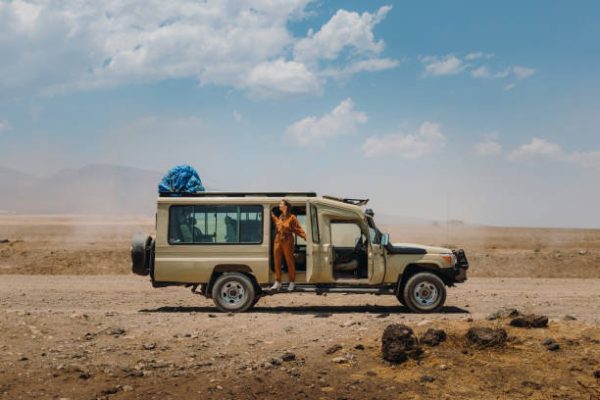
Big Wilderness and Longer Safari Adventures
Tanzania is the land of vast horizons and extended journeys, perfect for travelers who want to immerse themselves in truly wild spaces. From the elephant herds of Tarangire to the dramatic Ngorongoro Crater and the endless plains of the Serengeti, Tanzania offers some of the most iconic safari landscapes in Africa. And for those with more time, the adventure can continue beyond the Northern Circuit to other remarkable destinations.
Consider Tanzania if you want:
- Big wilderness areas
- Iconic safari landscapes
- Longer adventures
- Northern Circuit safaris
UGANDA
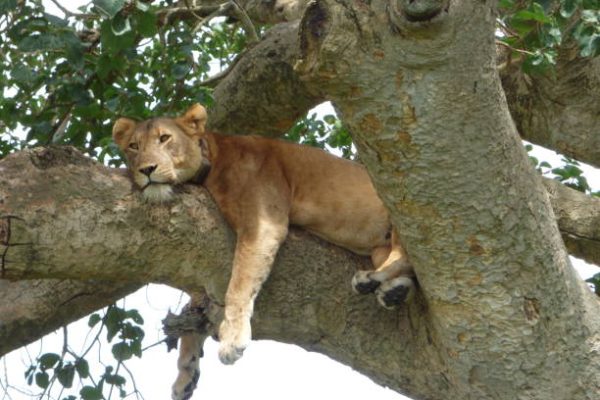
Wildlife, Lakes, Forests and Adventure
Uganda offers a safari experience that feels refreshingly different. Here, camping adventures blend classic wildlife encounters with serene lakes, lush forests, crater landscapes, and unforgettable primate trekking. It’s a destination for travelers who want variety, discovery, and the thrill of exploring diverse ecosystems all in one road trip.
Consider Uganda if you want:
- Murchison Falls
- Queen Elizabeth
- Lakes and crater landscapes
- Forests and primates
- A varied road trip
RWANDA
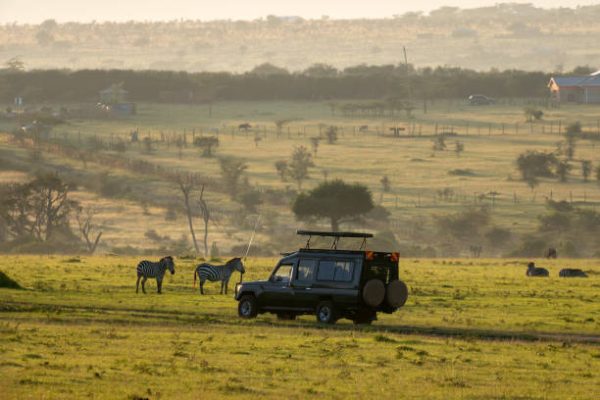
Scenic Roads and Gorilla Country
Rwanda is compact, beautiful, and full of character, making it ideal for travelers who want to combine a road trip with gorilla trekking and other unique experiences. Its rolling hills, scenic countryside, and accessible routes make journeys shorter and easier, while still offering unforgettable wildlife and cultural encounters. Many Travellers pair Uganda with Rwanda
Consider Rwanda if you want:
- Scenic countryside
- Gorilla trekking
- Shorter road journeys
- Uganda–Rwanda combinations
MULTI-COUNTRY CAMPING
One Journey. Several Countries.
For travelers with more time, East Africa opens up into one connected road adventure. Instead of limiting yourself to a single destination, you can cross borders and experience the diversity of Uganda, Rwanda, Kenya, and Tanzania all in one trip.
This type of journey is perfect for those who want to combine gorilla trekking with classic savannah safaris, scenic lakes with vast wilderness, and cultural encounters across different nations. It’s a true overland expedition that gives you the freedom to explore at your own pace.
Of course, a multi‑country safari requires proper planning. The vehicle must be prepared for long distances, and documentation, insurance, and routes need to be arranged carefully. With the right setup, the reward is an unforgettable adventure that ties together the very best of East Africa.
Should You Drive Yourself or Hire a Driver-Guide?
Camping doesn’t automatically mean you have to drive yourself.
Some travellers love being behind the wheel and deciding where the road takes them. Others would rather concentrate on the scenery, wildlife and experience while an experienced driver handles the journey. Both can work.
Self-Drive Camping Safari
You drive. You choose the pace. You decide where to stop.
Self-drive is ideal for travellers who enjoy independence and want the road trip itself to be part of the adventure.
You may prefer self-drive if you want to:
✓ Set your own pace
✓ Choose your stops
✓ Explore independently
✓ Build your own route
✓ Enjoy the road-trip experience
Driver-Guided Camping Safari
Prefer to let someone else handle the driving?
A driver-guide can take care of the road while you concentrate on wildlife, scenery and enjoying the journey.
You may prefer a driver-guide if you:
✓ Don’t want to drive unfamiliar roads
✓ Prefer someone else behind the wheel
✓ Want local assistance during the journey
✓ Are travelling with family or a group
✓ Want to focus on the safari experience
You don’t have to choose the same style for every journey.
Depending on your itinerary, you may also be able to combine camping, lodges, self-drive and driver-guided experiences.
The important thing is choosing the arrangement that makes you comfortable.
Camping Safely in East Africa
Camping in East Africa is an incredible way to experience the landscape, but it is important to understand that you are travelling through natural environments.
The key is choosing appropriate campsites, following local and park rules, and listening to the advice of rangers, campsite staff and your driver-guide when you have one.
Your camping setup should also be suited to the route and season. We can help you understand what equipment and vehicle setup makes sense for your particular journey.
Respect the environment. Follow campsite rules. Listen to local advice. Enjoy the experience.
Planning a Camping Trip?
Tell us where you’re going and we’ll help you plan the practical side of the journey.
When Is the Best Time for a Camping Safari?
There isn’t one perfect month for every camping trip in East Africa.
The drier months are generally popular because roads and trails can be easier to manage and wildlife viewing can be rewarding. The wetter or greener seasons can bring lush scenery, fewer visitors and a very different atmosphere.
Your best travel period depends on the country, route and experience you’re looking for
DRY SEASON
GREEN SEASON
SHOULDER SEASON
For a camping trip, the season also affects what you pack and how you plan your driving days. We can help you choose a route that makes sense for your travel dates.
What Does a Camping Safari Cost?
One of the biggest advantages of camping is the flexibility it gives you when planning your trip. But your total cost depends on more than the vehicle rental.
You’ll normally need to consider the 4×4 rental, camping equipment, fuel, campsites, park fees and any permits or activities on your route. The length of the trip and the country you visit can also make a significant difference.
If you choose a driver-guide, that will also change the cost of your trip. The important thing when comparing prices is to look at what is included, rather than comparing daily vehicle rates alone.
Your Camping Budget
| Category | Details |
|---|---|
| Vehicle | 4×4 rental and selected camping setup. |
| Camping | Rooftop tent and any equipment you choose to add. |
| Journey | Fuel, campsites, park fees and other route-related costs. |
| Experiences | Activities, permits and optional experiences depending on your itinerary. |
Your Camping Safari Questions? Start Here!
No. Your trip can be designed around your preferences. You can combine camping with lodges or other accommodation depending on your route.
Yes. Camping can be combined with a driver-guide if you prefer someone else to handle the driving.
This depends on the equipment and rental arrangement you need. Tell us what you already have and what you need, and we’ll help you work out the best option.
Some vehicles and setups can be arranged for cross-border travel, but requirements depend on the countries and route. Plan this with us before your trip.
It depends on the number of travellers, vehicle and camping setup. We’ll help you choose an arrangement that fits your group.
Absolutely! Camping can form part of a wider safari or road trip, including wildlife, gorilla trekking, lakes, forests and other experiences.
Your Camping Adventure Starts With a Plan
You don’t need to know every road, campsite or detail before you begin. Tell us what kind of journey you’re imagining, and we’ll help you work out the vehicle, camping setup and route that make sense for you.
Whether you’re planning a few days in one country or a longer East African road trip, we’re here to help you put the pieces together.